
white paper released 11.06.2025 - “Wound Healing and Cost-Saving Benefits of KeriCure Medical’s All-in-One Spray on Wound Dressing Products”
ABSTRACT
Traumatic injuries are highly susceptible to infection in both civilian and military settings. Early application of wound dressings that are simple, field-portable, and effective in infection prevention is critical to minimizing complications for rapid healing. Presented here is a case study where an active duty Service Member sustained a partial thickness burn to the mid back when an ejected brass cartridge became trapped under the person’s clothing during a training event. He was treated by his unit’s medic using KeriCure Medical’s Field Shield® Wound Dressing, a spray on topical hydrogel wound barrier containing antimicrobial silver and anesthetic lidocaine. Field Shield was applied daily for 5 days, then twice in week 2.
The burn completely healed within 14 days, with favorable cosmetic outcomes. Patient noted no pain or discomfort with use of Field Shield in burn management. Total product use was limited to less than half of the 0.5oz bottle of Field Shield (approx. $17.50 total wound dressing cost). Field Shield® provided antimicrobial protection, pain relief, and accelerated healing for the small partial thickness burn wound that resulted from a discharged brass cartridge. These findings underscore the value of antimicrobial wound care for minor injuries and burns in promoting rapid healing, preventing infection, and sustaining Service Member health and operational readiness.
INTRODUCTION
Traumatic injuries are common in both civilian accidents and military operations. When inadequately managed, superficial wounds may progress to cellulitis, abscess, or sepsis, contributing to lost duty time, hospitalization, increased consumption of antibiotics and dressings and reduction in operational capability. Ignoring relatively minor wounds in operational areas that have limited hygiene, adverse environmental conditions, limited medical supplies, and limited evacuation capability results in an increased probability of infection development. Early application of advanced dressings that are simple to use, portable, and provide both antimicrobial coverage and pain control could mitigate these risks, thus decreasing medical resupply needs, development of cellulitis and infections, and the subsequent need for medical evacuation.
A review of bacterial skin infections in the US Armed Forces (2000-2012) found that during this period there were 998,671 cases of bacterial skin infection. Cellulitis occurred in 50.9% of the patients. Cellulitis was also present in 96% of the associated hospital bed days. During this period, the number of medical visits for skin infections were 1.4 million and there were 94000 hospital bed days (257 years of lost duty time). The authors highlighted the significant impact that skin infections have on operational readiness.
KeriCure Medical has developed wound dressings based on elastic nanopolymer films that form a semi-occlusive barrier. These dressings balance wound moisture, hydrate the wound from the hydrogel, absorb exudates, and facilitate autolytic debridement.
One of KeriCure Medical’s advanced wound dressing products, Field Shield Wound Dressing, was utilized in this case study. This advanced wound dressing is designed for the management of a number of dermal wounds, including partial and full thickness burn wounds, chronic wounds, abrasions and other traumatic injuries. Field Shield is a spray on hydrogel dressing that is intended to create a moist wound environment that promotes wound healing and slows burn progression by forming a protective, highly elastic, semi-occlusive polymer barrier over the wound that maintains a critical moisture balance for optimal healing. It incorporates a topical anesthetic agent, lidocaine, to provide local pain management within minutes of application and contains silver hydrosol that kills bacteria and fungi within 10 minutes of application. The novel polyacrylate polymer in the product is highly absorptive, removing exudates and infectious material from the wound beds which aids in closure and promoting granulation tissue formation.
This report evaluates the performance of a field efficient, multi-use primary dressing, Field Shield® Wound Dressing, in treating traumatic injuries with a focus on wound closure, cosmetic outcomes, infection prevention, and cost-effectiveness.
METHODS
This prospective observational study was conducted following written informed consent. A 26-year-old male presented with a partial-thickness thermal burn to the thoracic region of the back secondary to contact with an ejected brass cartridge. The injury was managed on an outpatient basis by the subject’s battalion medic. Upon notification, the wound was cleansed with KeriCleanz® Antiseptic Spray, a topical wound cleanser containing a small amount of hydrogen peroxide (1%) and silver hydrosol antimicrobials. Field Shield was subsequently applied directly to the cleansed wound surface. Neither product was rinsed or removed following application. The treatment was well tolerated, with no reported adverse effects or complications.
The Field Shield dressing was spray applied daily (2 to 3 sprays per dressing application) for 5 consecutive days, then applied 2 additional times prior to reaching 100% epithelialization by Day 14 post-injury. No removal of the dressing was required between applications, and the subject maintained routine hygiene and showering throughout treatment. Subject continued their training exercise and routine activity, including aquatic training, ruck runs, and other physical activities.
RESULTS
Field Shield Wound Dressing demonstrated effective, rapid, and durable wound management in the presented case. No evidence of infection or complications was observed throughout the healing process. By day 14, the wound exhibited smooth epithelial margins with no visible scar formation. The subject reported an absence of pain or discomfort at the wound site during the course of recovery.
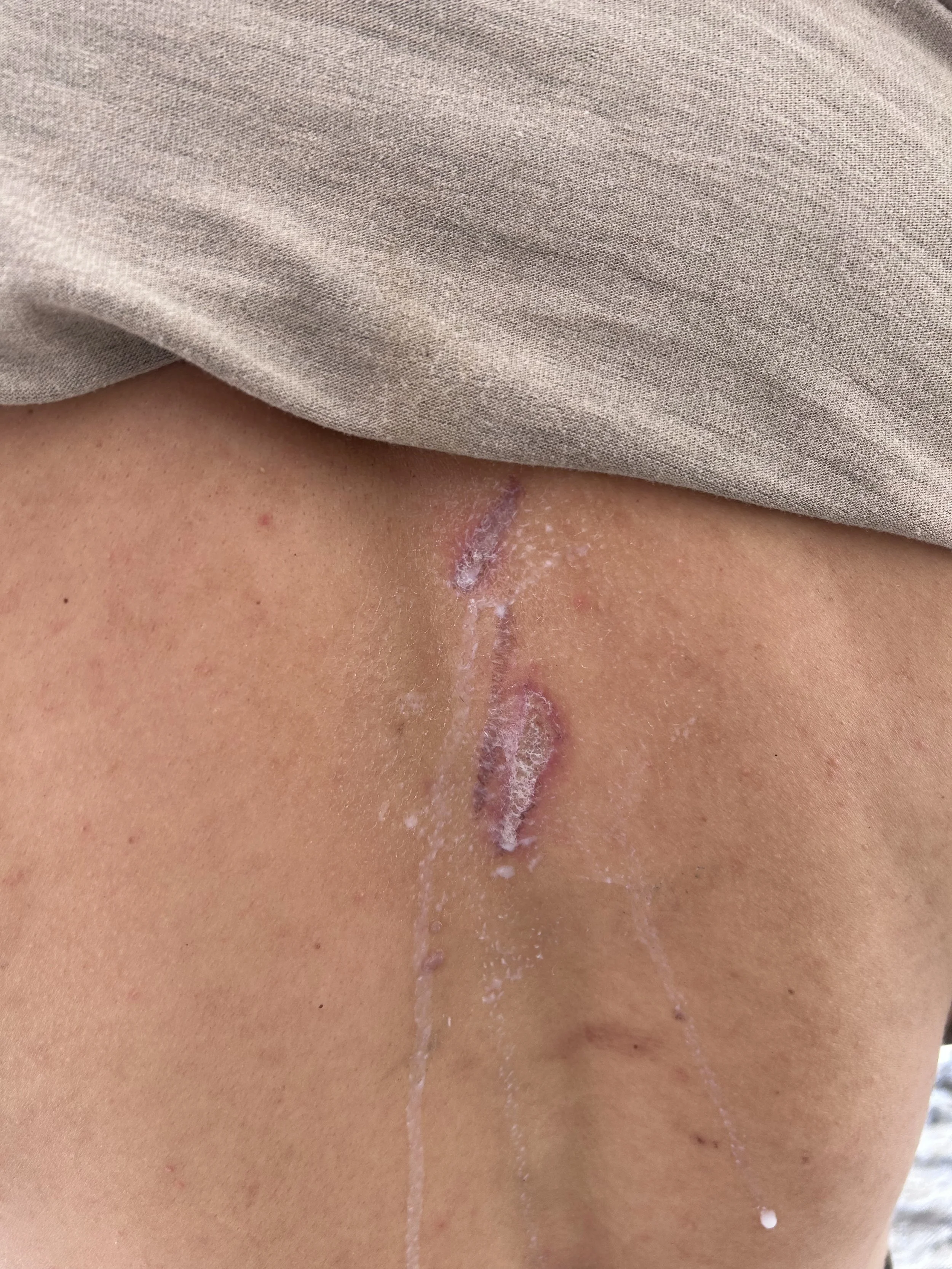
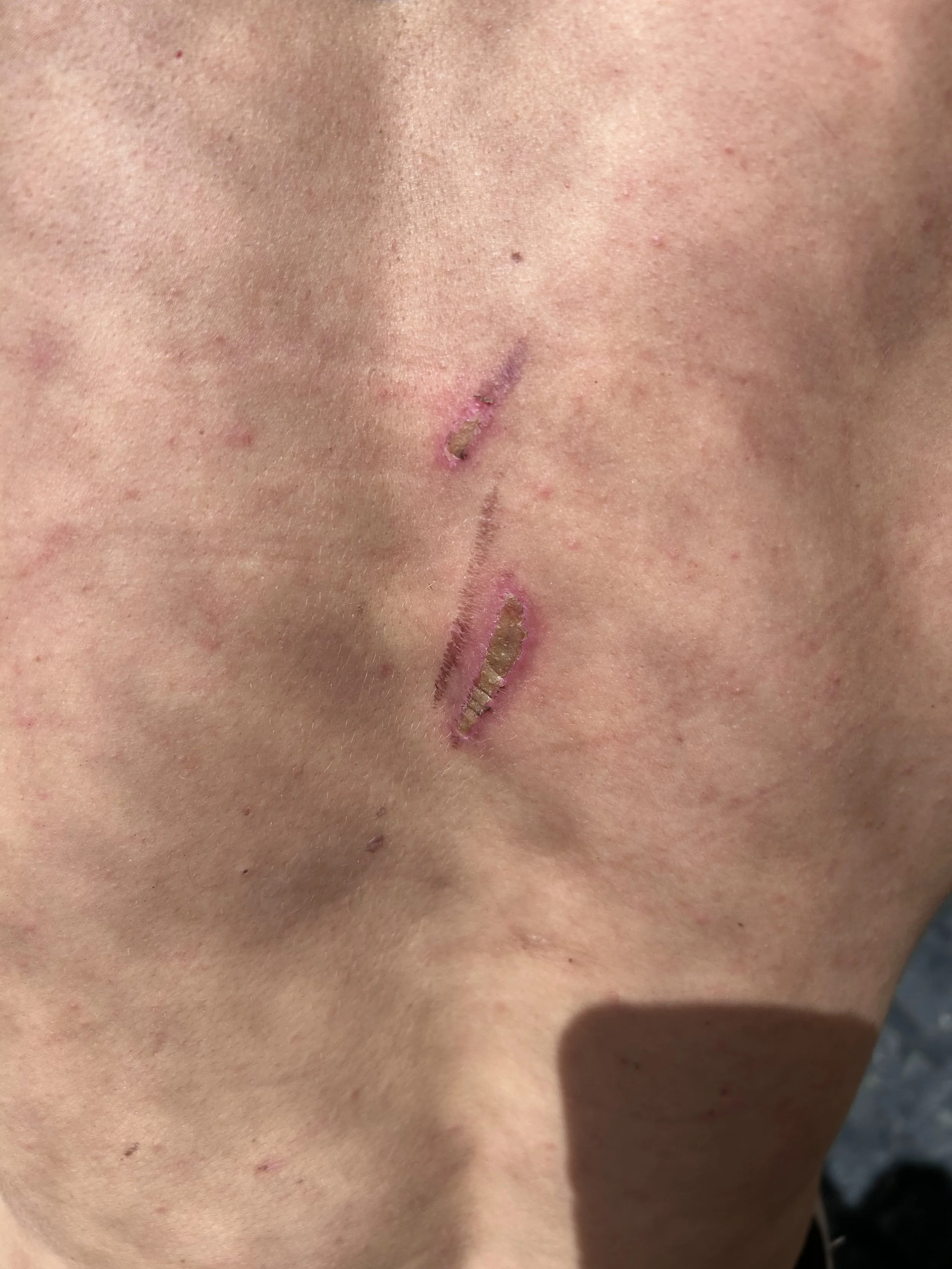
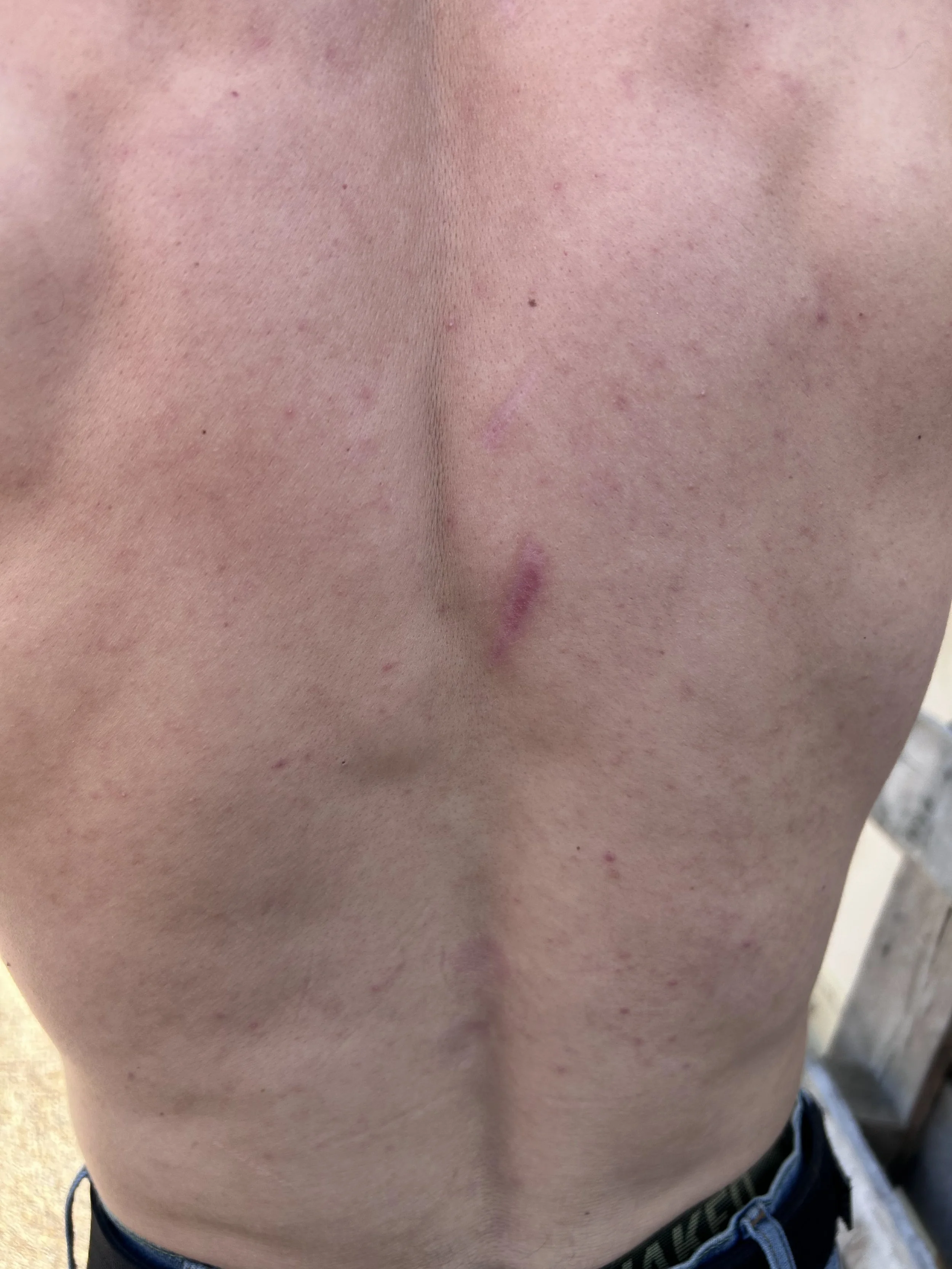
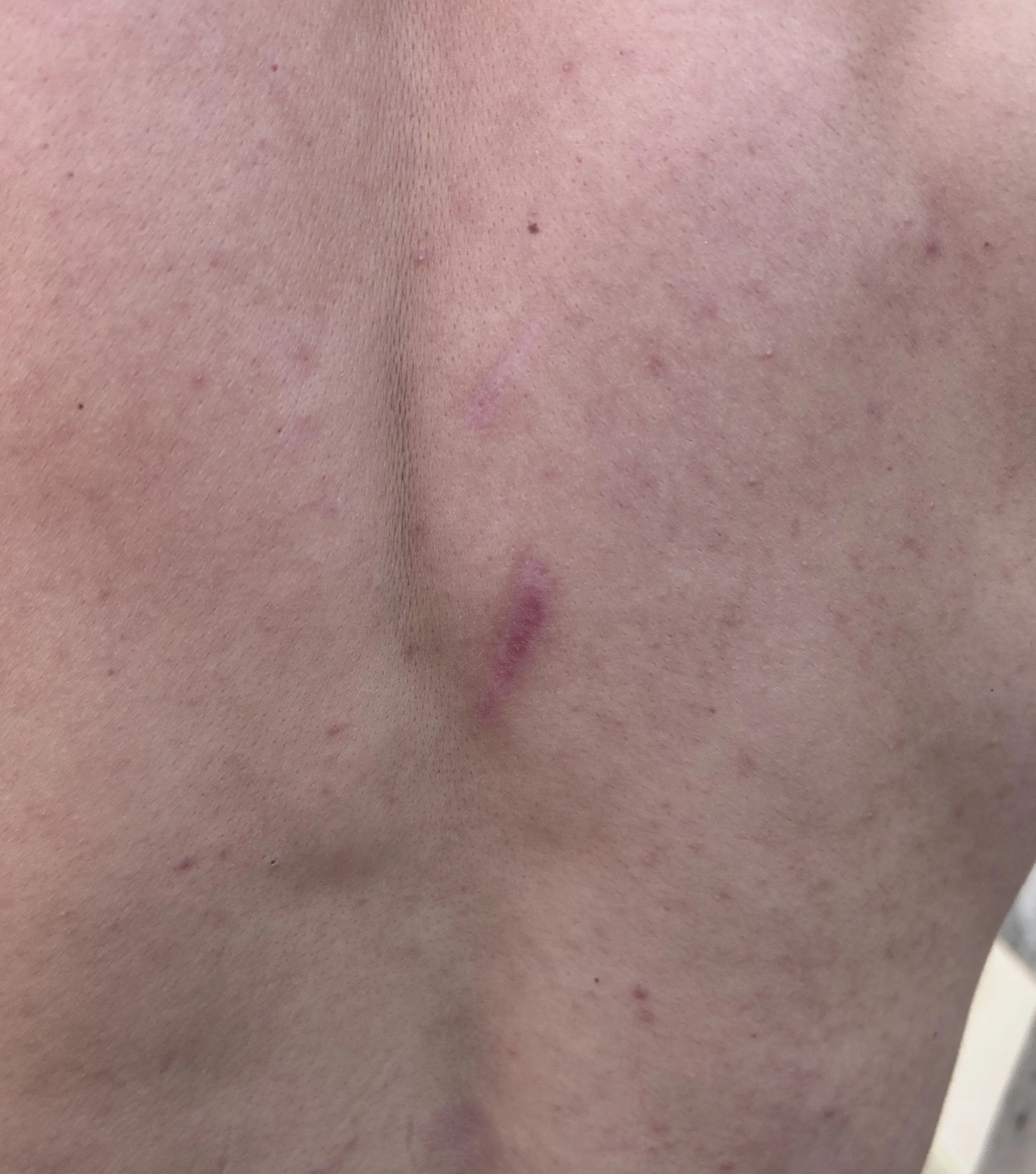
Figure 1: From left to right – Day of injury (Day 0), Day 2, and Day 14 post-injury (far and up close).
DISCUSSION
It has been well documented that relatively minor skin wounds, if untreated, can progress to infection, cellulitis, and hospitalization. These types of wounds tend to be ignored, especially in military Service Members and among those deployed or on mission. Among the risk factors favoring development of infection are limited hygiene, dirty clothing, repeated friction from clothing and equipment (rucks), environmental factors (humidity), and shared equipment. Unfortunately, when these infections occur, the increased requirements for logistical resources to treat the infection, removal from duty for management of the infection, and other complications may degrade operational readiness.
This case study demonstrates the effectiveness of Field Shield® in managing traumatic dermal injuries such as burn wounds. Clinical outcomes included avoidance of infection, avoidance of surgical debridement, excellent cosmetic outcomes, and pain control that allowed the subject to remain on duty and continue the training exercise during treatment. Practical benefits included simple application of the dressing, complete coverage on mobile areas, transparency for wound monitoring, and reduced dressing supplies required for burn care. In addition, with proper training, this type of treatment can be easily self-initiated and monitored, reducing burden on unit medical staff during deployment.
These preliminary findings indicate that KeriCure Medical wound care products represent an effective approach for infection prevention in dermal wounds and burns when applied near point of injury and maintained throughout the healing process. This case study demonstrates that the novel wound dressing formulation, containing silver hydrosol and the topical anesthetic lidocaine, facilitates accelerated healing, provides effective analgesia during treatment, prevents progression of minor burns to deeper injury, and supports favorable cosmetic outcomes. Use of Field Shield in this case prevented infection and cellulitis development in a high-friction region subject to repeated contact from clothing and equipment.
CONCLUSION
KeriCure Medical’s Field Shield® Wound Dressing demonstrated rapid wound closure, effective infection prevention, pain mitigation, and enabled the Service Member to maintain full duty status throughout treatment. The product’s practical advantages included ease of application, complete coverage and protection of high-friction areas, transparency to facilitate continuous wound assessment, and reduced need for additional dressing materials during burn management. The dressing’s durability and waterproof properties permitted uninterrupted participation in training exercises during the healing process. Its compact, multi-use design and minimal training requirements highlight its potential value for deployment in military and other resource-limited or austere care environments.
Author Details:
Rick Hammesfahr, MD – Tactical Medical Consulting, LLC. Georgia, USA
Kerriann Greenhalgh, PhD – CEO and CSO, KeriCure Medical, Tampa, FL, USA